
- Alcohol
- Faith
- Mental Health
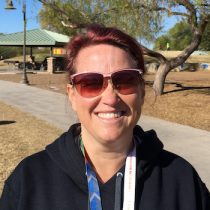
Submitted by: Susanne Johnson
Ten years ago, I was drinking very heavily and I was suicidal. I was a single mom of three children, aged 6, 5 and 2. My suicidal thoughts were overwhelming but I didn’t want to leave my young children without a mother– so the only solution in my thinking was to take all of us out at one time. I was contemplating how we could all leave this world together. I could not imagine leaving them behind alone and with the trauma of a mom who had committed suicide.
When I realized that I had it all planned, I called my best friend. She knew me and came over right away and even brought a babysitter for the kids with her. She dumped all my booze straight into the sink. I was so drunk that I eventually passed out. When I woke up the next morning I decided to get help. I have bipolar disorder (also known as manic-depression). I had depressive episodes all through high school, and everything went completely untreated. I didn’t use drugs, but it was the alcohol that almost brought me over the edge that day.
I grew up in Wisconsin. In that environment it was totally normal to drink a lot—even in the mornings. If you didn’t drink, you were the abnormal one. I couldn’t figure out for myself why alcohol wasn’t fixing everything. Alcohol made everyone else I knew feel better; just not me. It added to my delusion that I must be so messed up that even alcohol couldn’t fix me or give me relief. My use of alcohol was never for pleasure– it was always a desire for self-medication.
I was so depressed that terrible night that I was almost to the point that I would have taken my own children’s life. To me, at the time, it didn’t feel like the end. I felt sure that I would have had end it for myself somehow anyway. My family relationships were so toxic and my depression so bad that I didn’t see any other way out. Alcohol was not my problem that night– it was supposed to be my solution. It failed at being the solution and almost made a bad situation much worse.
After my friend took the alcohol away from me, there was nothing left at all. I was in a totally hopeless state of mind. There was nothing left anymore. Looking back, that state of hopelessness seems strangely amazing, because once there is nothing left, then anything is possible. I couldn’t see it that day, but if you are at that point it’s the most pivotal point in your life. From then on, it could only get better.
Right away, I started attending counseling and my doctor put me on antidepressant medication. I could not enter a hospital since I had to care for my three children, but participating in the outpatient therapy and finally getting the right medication changed my life.
As far back as I can remember, I never knew what it was like to feel decent before then. Somehow I don’t have many memories of my life before adolescence. I only recall bits and pieces from my high school years, but even then, I was depressed. So this felt like a whole entire different world to me. I was 30 years old before I received treatment– it has been many years of suffering before that.
There are so many different ways to recover, so many different paths, and so much misinformation about mental health disorders and substance use disorders. One thing is (in my opinion) essential and that is self-awareness. Be connected to yourself and be connected to something greater than yourself, whether it be universe, God, nature, anything you are able to fully connect to. I am not the most powerful person in this universe. And if you don’t know who you are or don’t know how you feel, you can’t recognize your triggers, and you can’t change anything about your life. None of us wants to feel that bad at all. Change has to start with awareness.
Three years after all of that, I became really ill and was put on Percocet for six months while doctors tried to figure out what was wrong with me. I lost 25 pounds, and was in incredible pain. I had a gallbladder surgery and all went well. Then I ran out of pills. I thought it would be no problem, and then I learned what addiction means.
I thought I was septic from the surgery or something else went wrong. I had horrible pain. I went back to the doctor and she said, “Didn’t we ween you off of those?” Needless to say, I didn’t want to go back on any other opiate drug at that point because I was already a few days into detox. I knew what would happen if I went back to Percocet. I went through it (withdrawal) on my own.
I ran a lot. Running was a good help for my recovery. I cleaned up my diet. I went back to school to become a life coach and therapist. In school, we had to work on each other to learn, and it changed my entire life. I realized that those traumas that I thought were no big deal were still stuck in my mind, driving my behaviors. Fortunately, I was able to work on them.
Today, I run a non-profit that is an education and advocacy agency focused on building recovery-ready communities. Every single community should be recovery ready, which means that the community has all components that someone in recovery needs for his support. There are so many communities that want to do something but don’t know where to start. There are many moving pieces in recovery, prevention, and treatment, that we have broken down into easier parts. In a way, we provide a blue print that someone can take to his community to improve it.
My full-time job is in a methadone clinic. A lot of the people who go there are homeless, and many of them are over the age of 40. Many suffer from chronic pain and would be using some form of opiates otherwise. I’m glad that I can help those who need it. Everyone has a different struggle, and I hope you find the way that helps you.