
- Alcohol
- Friends & Family
Submitted by: Hillary Belk
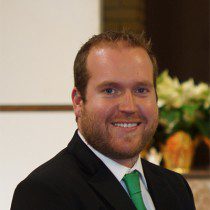
I originally met this man on social media and phone calls through Young People In Recovery (YPR). I got to meet him in person after seeing him and Devin present their awesome recovery message training. I looked at him and said, “I am really happy you decided to get sober!” The way he speaks out about recovery is natural and very powerful! That was such a fun Collegiate Recovery Conference in Minnesota. It was hosted by the Step Up program at Augsburg College. What I love about him is the fact that he is an example of why it is so important to have places for young people to go who are new to the process. Robert was 58 days sober when he came across YPR’s website! He was able to see that people young and in recovery are having fun and working to help other people through awareness and the empowerment this transformation brings. I am so grateful to be working alongside such an amazing person. He has been instrumental in the creation of a Collegiate Recovery program at UNT in Texas. He is a recovery advocate on many different levels and spends time in Washington, DC sharing his story and unprecedented support for the recovery movement! I am pleased to introduce you to my brother in recovery, Robert A.!
How long have you been on your recovery journey?
A: 2 years and 10 days (May 7, 2013).
What is the biggest positive change in your life since then?
A: A lot of smaller ones (traditional), relationship with family again, spending holidays with family. Was in sober living last year, so having that opportunity was exciting. Another positive thing is having friends again, being able to be financially secure. Your traditional positive outlets help compound it into this positively giant thing which is having a life again. All these aspects coming together makes the big picture of what recovery looks like. To me, the simple answer is living in recovery is the biggest thing. It allows all these smaller things, phenomenal things to really occur. Without it I know where I would be, stuck in that same kind of rut that I was in for 10 years.
What led to your need for recovery (from substance abuse or some other issue)?
A: I am a felon in the state of Texas. I have three DUIs which was a pretty big factor with me finally getting into treatment. I spent a year in the rooms, putting together 60 and 90 days and would relapse. So it took a year before I had the willingness to go to treatment. Getting my third DUI was the subjective rock bottom for me. I had a little bit of knowledge of what powerlessness was and the things that were talked about in the rooms never really clicked. There were no young people in the meetings I went to so disconnect was always an issue. I think it took me a while given that last DUI. I don’t know if I had been in the rooms before my second DUI if that could have changed the outcome sooner, but it did take the seriousness of getting a felony DUI to realize something had to change. I had absolutely no control over this and like it says in the big book, the idea that knowledge, really does not make a difference. My analytical and logical mind needed that final little bit of information that told me I knew all of this; what the disease looks like, how it manifests, and that I probably have it. But, I still decided to make a really bad choice that led to a felony DUI. Loving family and supportive friends surrounded me and helped me in making the decision to go to treatment. It was the perfect storm and I was willing and had the resources. Now was the time to give it up and let someone else help me.
What was the turning point for you?
A: I think looking back outside of the reason I finally went to treatment there were two definitive turning points in my early recovery journey. I went to a thirty day treatment that was a traditional program. Three weeks in there were family sessions and in-depth family counseling groups. One breakthrough I had was around how I perceived my father. My dad passed away when I was younger. I placed this man on a pedestal for a variety of reasons. The perception of my father stemmed from an event that happened as a child. My mind convinced me that this belief was true, but in reality it was false. In a family session it came out that the truth I had was distorted. For a long time I placed blame on my dad, mom and brother. What I thought transpired with my family was incorrect. My father was an alcoholic, was not a person in recovery and didn’t fight it before he died. One night when I was out at a school function, my father was getting inebriated. He came home and got in a fight with my mom and my brother. My brother and mom decided they were going to leave the house and in order for them to get out my brother had to use force. In the process he got pushed into a coffee table and at that point my brother had to grab a baseball bat to warn my dad so he and my mom could get out of the house. This is the story I believed to be true. This is what I told myself for 12 years. What actually happened, I figured out through these in-depth family sessions, was that my dad physically attacked my mom. In hindsight it was still physical abuse, but for some reason him doing it to my brother was better than me realizing it was mother. So in being told the truth I had a big eye opening moment that allowed me to get in touch with reality. I was able to disconnect and reconnect how I had visualized my dad and connect with my mother, which was really important. However, it did a lot in terms of treatment in that it broke down this final barrier. The facade of me being prideful and grandiose in how I perceived my father really upset me. The next day I met with the counselor and addressed the wall that had been broken down. This allowed me to start feeling some very strong emotions and gave me the opportunity to do some really good work for the following three weeks. I did begin working around my substance use and the underlying trauma. I began to see why I was doing the things that I was, so I elected to stay two more weeks after that; 6 weeks total of treatment. That one moment looking back, if it had not happened in that family session while I was in treatment…I don’t think I would have necessarily missed the realization, but I am grateful I went through it even though it was horrible experience. Growing through it was hard, but without it happening I don’t think I would have elected to stay longer. I was able to get down to the core issues.
The second turning point was 58 days in recovery, I was in sober living in Denton, TX and it was the day I found Young People in Recovery. I was on the computer at the transitional sober living house and came across the webpage. I read through all the stuff and got to see pictures of young people new in recovery, old in recovery, and establishing themselves in long term recovery. They are open about their lives in recovery and how phenomenal it is. I mean I had never seen social advocacy from this group of young people like me that is saying it doesn’t matter if you had 58 days, like I had, or 58 years, you can speak out and be proud of your recovery. At that time I had just found out I did not have enough sobriety to get into some of the bigger Collegiate Recovery programs. This was a very shaming thing early in recovery because I felt like I was not good enough. I had this passion to move forward and I didn’t have any outlet for it, so finding YPR and realizing that I was perfectly fine having 58 days, wanting to speak out for recovery, wanting to do certain things and feel okay with who I was. Finding YPR on that 58th day started the creation of YPR-Texas. It led to the creation of the recovery program at North Texas and all these great things. The turning point in early recovery to reaffirm that I was good enough, and was okay with who I was, was the message I needed early in recovery. Those two turning points saved my life!
What is one important truth you have learned through the process?
A: The biggest truth I’ve learned is really being able to identify what truth is. What I mean is I think, as advocates and as people in the field of trying to spread the news of recovery so to speak, we believe in the idea of multiple paths to recovery. There is not one correct way to have it. You really have to believe that everybody’s truth is interdependent and can go co-exist with other truths. My truth is a 12-step based recovery along with peer support and a variety of other things, but my main program is 12-steps and abstinence. I have friends that are harm-reduction and I believe inner turmoil can exist; this is not a truth for a lot of people. They have a mentality of recovery that looks different than mine, it can’t be true and real and for me that is just not the case. The ultimate truth is that multiple truths can exist at one time. So I can have my truth. I have to be abstinent to survive in life. The truth for my friend is that his recovery looks different, or his reality looks different, but it is just as valid. To reconcile in my mind that my truth does not have to be someone else’s truth is so important to recovery, and I think if more people would realize that they can co-exist. Their truth can be real as well as other’s truth. We would have a much larger recovery community because we would not alienate people. I spent a lot of time trying to feel comfortable and not shamed early in recovery because I didn’t have as much time as other people. I talked about YPR before sending a message that recovery looks different, walks different, but it is really all the same. It is available if you want it in a variety of ways and that is the truth we need to be spreading and that truth saves lives. Recovery saves lives no matter what it looks like. To me, that is the most important thing I can realize. It allows me to work, socialize, and have a support group with a variety of different people that potentially I may not because I wouldn’t think their truth and their recovery was valid because it didn’t look like mine. I am extremely grateful that I believe that today.
What are you most proud of about your life today?
A: I think this is a two-part answer; what I am personally proud of and what I am professionally proud of are both huge aspects of the life I have today. Personally, I am most proud of the relationship I have with my mother. I was 15 years old when my dad passed away, before that I was absolutely a daddy’s boy. Doing sports, going out and practicing, playing video games with him. I was always around my dad. Then he passed away and my substance use and my behavioral outbursts started and so for the next 10 years I just demolished my relationship with my other parent – my mom. It did not become apparent until I found recovery how important a healthy and mutually beneficial relationship would be with my mom. We have been rebuilding our relationship the past two years. I remember looking back when older people could sit and talk on the phone for hours with nothing to talk about but they would just talk because they liked talking to the person on the other end. I never really understood this concept, I was like why in the hell would you want to talk on the phone with someone you don’t ever talk to and certainly not for hours about nothing. Then six months ago I had an hour long conversation with my mom about absolutely nothing and we just sat and talked. It is the most magical thing that recovery has made possible. Having that relationship and understanding you can sit on the phone for an hour and just talk to somebody because you care about them. My mom again is the thing I am most proud of personally. Professionally, the work we have done at the University of North Texas, taking three of our students in recovery and creating the student organization Eagle Peer recovery in a year and a half. Going from a fledgling student group to now having 1200 sq. ft. in a university building, working with the Provost for the Collegiate Recovery program and having staff and scholarships. All these cool things empowered me as a person in long term recovery. To go from a lowly student to a higher learning institution is a success, but to then go even further and create something out of nothing…Sheer will and passion along with a lot of support from faculty members and staff made it possible. You really can’t describe this as being proud, but it has been a life changing experience. This is the stuff you hear about, like when you are young and said, “you can go out and change the world if you want to.” It’s hard to believe that at times, but we saw that at UNT. I get to be the program director of the Collegiate Recovery program, something I founded and created with a lot of help, I don’t think I will ever forget. As I move on and graduate from grad school and do whatever I do professionally I will always remember what it took and the perseverance. I remember getting the phone call when the Provost signed the paperwork that created the Collegiate Recovery program and the department chair called and we had worked so hard and it finally happened because of all of our determination.
What is one of your biggest struggles in ongoing recovery? How do you overcome that?
A: I think the biggest one is you get disconnected from what is most important to your personal recovery. Especially for me doing these bigger things, macro level programs and services and resources whether its sitting on the board of YPR, running a collegiate recovery program or going to DC to do work for SAMHSA. With all of these larger than life things it is really easy to forget about this individual. I ask, “What do I need to do day in and day out to survive in my recovery?” Sometimes it is easy to lose sight of that. Once that starts to happen and I disconnect from my roots, so to speak, in recovery and the restlessness, irritableness, and discontent starts to creep in and it is dangerous sometimes. I don’t really consider dangerous in terms of relapse or starting to use, but it is dangerous in terms of my overall wellness. It is easy for me to take for granted how good life has gotten so getting down that slope where you are depressed or discouraged are emotions I do not have to feel anymore. I remind myself sometimes to take a look at this personal level to grow my own recovery. I find myself worrying about how we are going to help the next person, or how are we really going to take this message and this program to make it available to more people to help them, if you forget to take care of yourself? I don’t do it as much as I should, but self-care is really important and the need to take a step back and realize I can’t help anybody if I am not well. To me that is the biggest barrier, taking care of me.
Are there goals you have met or dreams you pursued that you are particularly proud of?
A: I think I have talked about some of them. Being able to have and run the Collegiate Recovery program at UNT is a huge goal and a personal achievement. Sitting on the board of YPR National is a really big achievement of mine. Who would have thought this young kid from Pennsylvania would ever be on a board of a national advocacy organization, that is pretty cool. Looking back over the last year and a half, outside of the stuff we have already talked about, the things that were really cool and I am so glad happened was getting to go to DC to tell some of my story at the Recovery Month press conference in the National Press Club. It was huge! It was a national platform with some of my mentors and heroes in SAMSHA and ONDCP. People I looked up to in early recovery that were really powerful in this movement. People I had watched and read about. I was in the back room talking with people I looked up to for the last year and a half. I got to go up on a podium and have thousands of people listen to what I had to say and it was broadcasted nationally. I will never forget that, getting to sit there and be surrounded by heroes in the movement was a very big achievement for me. Being able to spread some of my own beliefs and philosophies and to have people listen was huge for me.
Is there a truth or piece of advice someone shared with you that has helped you on this road?
A: There is a lot. After I started treatment we were working on the Big Book, step work, and talking about fear, willingness and all these things. My counselor told me something that really stuck with me and guided my early recovery. He said that fear alone wasn’t enough to make this work. It would take more than doing the steps, being honest and to be willing and open. It had to be a combination of both fear and pain. It was imperative that pain had to be stronger than the fear. I don’t know why this really stuck with me. I felt both of these emotions. Where did the willingness come from for me? It was that I had to overcome the fear, mostly fearing as a young person the idea of doing this forever. I was never going to be able to drink again or have fun. What is life going to look like, what does this big change mean for me, and am I going to lose who I am? I also thought to myself, if I do drink again, am I going to die? There was a lot of fear on both sides of the aisle; why I should do it and why I shouldn’t. There was a lot of internal pain and shame. I told myself, “You have done these things, you have hurt people, and you have hurt yourself.” It was not until I took a real honest inventory that the things I did and did not want to do again were stronger than the fear of what forever looked like. The things I was fearful of being able to take that inventory, being able to take current stock. I began to realize that the stuff and the experience I caused and the pain that I was in emotionally and spiritually was stronger than any fear, so that talk with him was very important to me and stuck with me throughout. I am not advocating that people need to find this insurmountable pain to find recovery, but where I was at after spending ten years in active use I needed to hear that, even if I wasn’t free there was something stronger out there at the time. It was the pain overcoming the fear to get into it. I have come to realize since then it was my higher power that manifested through pain to get me where I need to be and get me to work this to be able to live again. I believe the pain was put in my life for a reason and I am grateful for it. As much as it hurt and as much bad stuff happened it was necessary to get me where I am at today.
What would you tell someone at the beginning of this journey who is afraid they can’t do it?
A: I have been there as a young person in recovery and in my experience I have seen this be more pronounced in young people. I didn’t think we could do it because we figuratively have eternity ahead of us. We think the average life expectancy is 60, 70, or 80. A huge chunk of our life we have to be on this insurmountable path living in recovery. Nobody thinks they can do that really early on, and I experienced it. The biggest thing to tell those people is to realize there are thousands out there that thought the same thing and really believed it was impossible, and through a variety of things and connecting with each other, the truth is there is proof and it is not insurmountable. Look, do you believe you can’t do this because you think you have to do it alone? I thought I was unable to do it because I couldn’t even stop drinking by myself. I needed to connect with other young people that had been through the process. I came to the realization that I was not doing this alone. Through my 12-step program I was doing it with a higher power, but in the terms of life and living I was going to have a huge support network of young people and elders. I think to me that the big switch outside of an individual 12-step program, just in terms of recovery and young people showing them and really having a talk, is that you have people that will help you through this. You don’t have to be alone anymore and that may not be the case for everybody, but I know it is for me.Ten years of my life I felt alone. A lot of that was of my own doing. I forced myself to be alone but realizing I was not and using that support was enormous in coming to this realization. Knowing that I don’t have to be alone makes this dodging task of living in recovery smaller. Every young person that I add to my support network makes me that much stronger. It lifts me up that much more to build the ladder over this barrier. On one side it is life in addiction and on the other side is life in recovery. It’s all of the young people banding together with me that help me build that ladder over the barrier. That is what I would tell somebody, you do not have to do this alone!