
- Drugs
- Friends & Family
Submitted by: Nadine Herring
I’ve spoken before about how great a resource Twitter is for the addiction and recovery community and the story I’m about to share is another example of the amazing people I have met there.
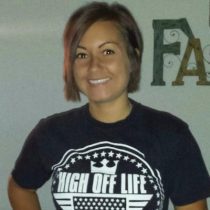
I met Brittany on Twitter initially through her very encouraging, supportive, and inspirational tweets; she has a way of seeming to post just what is needed and I can say without exception that her posts have always put a smile on my face or bought a tear to my eye.
I’ve also connected with her on Facebook, and her honesty and openness in talking about her struggle with addiction and how she was able to get to, and stay in recovery draws you in and makes you want to get to know her. Her dedication to her family keeps her focused on her recovery and she is an excellent example of paying back the gift of recovery by being there for others. It is my great pleasure to share Brittany’s story with all of you!
How long have you been on your recovery journey?
I have been on this journey for nine years.
What is the biggest positive change in your life since then?
Contentment, hands down. A close second would be experiencing life; truly feeling my feelings as they come, and not being afraid to allow myself to be vulnerable enough for that to take place.
What led to your need for recovery (from substance abuse or some other issue)?
I sought out a recovery program to help free myself from a dependence on prescription medication.
What was the turning point for you?
I had run out of strength, having exhausted myself emotionally, physically, and psychologically. I was facing some serious consequences and found myself backed into a corner. I was afraid to try, but oddly enough, as much as I thought about it and told myself that I didn’t matter, I was still afraid to die.
What is one important truth you’ve learned through the process?
There is no such thing as a throw away person; people can, and do change.
What are you most proud of about your life today?
I am proud to be a healthy, present, & stable example to my children.
What is one of your biggest struggles in ongoing recovery?
Even though I am coming up to my ten year mark, I still struggle with a couple of things that stand out more than any others, but mostly, with my memory. I have huge gaps in my long-term memory and have a really tough time with my short-term memory as well.
How do you overcome that?
First, I have chosen to accept that certain blocks of time are simply gone. That choice has helped tremendously. My short-term memory continues to improve, but I have adapted and have learned to utilize helpful tools, like: a wall calendar, a Google calendar, a large whiteboard, and it doesn’t hurt having a husband who is direct, who doesn’t have a problem incessantly reminding me of to-do’s, dates, and other memories that I can’t immediately recall.
What part of your life do you find most satisfying since you have been in recovery?
I like that I believe in just…being.
No more running. No more chasing or tirelessly obsession, searching, or compulsively attempting to attain a certain level of control over myself. I allow myself to live and to be –me. It brings me a sense of peace and confidence knowing that I am okay the way that I am and with the life that I have been gifted.
Is there a truth or piece of advice someone shared with you that has helped you on this road?
This journey has shown what it means to have community. I have had so many amazing women enter my life as mentors, accountability partners, and friends who I consider family. I have so much that I could share, but I think if I had to choose one piece of advice that has stuck with me all of this time it would definitely have be that one of the best things that I can do for my recovery and my mental well-being is to learn to discern the difference between the things that I can change, and what I cannot. It’s a very simple concept. I appreciate the simplicity of the idea and over the years it has had powerful effects on the way I think about stressful situations, or things that I may not know what to do with.
What would you tell someone who is at the beginning of his/her recovery journey and is afraid he/she can’t do it?
I didn’t think I would be able to either. I truly didn’t. Whether you are on a 12 step journey or not, the idea behind living one day at a time, or even one moment at a time, is definitely encouraged to help this kind of thinking. I am not sure anyone goes into this feeling confident or even, ready.
So I would say, set short-term, realistic goals. When the hard moments come, and when the waves of uncertainty flood in, just keep going. It may feel like nothing is happening; nothing has changed. A few weeks later you will look back and you will be able to see a little bit of change and then one day you will find yourself in disbelief when you think about how far you have come.
If I can do it, you can totally do this.