
- Drugs
- Friends & Family
- Mental Health
Submitted by: Susanne Johnson
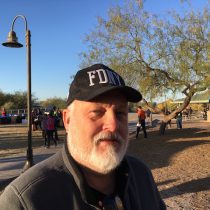
My wife Linda and I lost our daughter Margo in August of 2015 (last year). She was our only child and we had gone through a lot to adopt her. I teach human development and know about hereditary problems and diseases. We never knew much about her parents. We joined the Heroes in Recovery walk in Arizona to help build awareness and get the message out to others that addiction is a disease and people need help.
We found out that our daughter smoked pot and tried meth for the first time when she was age 15. She didn’t drink much alcohol at that time and even her drug use wasn’t too bad until she moved out at age 18. We thought it was still typical teenage stuff. But she wanted to get out of the home and be on her own as fast as she could. Things got worse after she moved out on her own.
It was a challenge to initially get our daughter into treatment, but finally she agreed to accept help. First, she went to detox and then, later, she went to outpatient therapy. Several months of being in and out of sobriety followed, and she was in and out of outpatient therapy at different locations. Finally, she got into a residential program for six weeks, followed immediately by the tragic incident of her passing.
We raised our daughter to be independent and ultimately that was possibly part of what ended her life when she was only 20 years old. After her six-week residential treatment stay, she thought she could do it all on her own. She thought she know what to do and refused all help.
Eventually, she was showing us signs that things were not okay with her and we decided to take her back to meet with her counselors. When we got to her home, we had to break into the bathroom door to find her. Later, they revealed she had a very toxic combination of meth, heroin and spice in her system. She was less than a week out of treatment when we found her. She was a victim of her chronic and fatal disease.
Before her passing, of her counselors had told us that she was bipolar, but we never got it officially diagnosed and she never got any specific help for that. Most counselors agreed that her drive to use drugs came from an urge to self-medicate. I wish that treatment for mental health disorders could improve in this country and become more accessible to all people. Maybe my daughter could be still alive if her mental health problems had been addressed earlier.
As her parents, we can’t do much today, but we did speak at some of her support groups about what happened to her, reminding all others in recovery not to try to do it all alone. We encourage others to reach out for help. Addiction is such a powerful disease—no one is able to fight it alone.
Our life has changed. There is an empty hole every day without her. We miss her so much– she was very loved. We often think about how she missed out on all the opportunities she had. She was great in school and she loved to help people. Originally, she wanted to study at Stanford Medical and at one time she had the grades to do so. At one point she wanted to become a drug counselor, and also she had the dream of working for the Red Cross.
On the day that we found her, I immediately started CPR in an attempt to save her. We couldn’t save her, but we later found out that she was an organ donor and because of my CPR, her organs were able to be donated. We were told that four people received new life because of her organ donation. We sometimes wonder if we will ever receive contact from the people she saved. It would be nice to know where some part of her continues to live. One thing we know for sure though: Her heart went to Stanford Medical, a place she always wanted to go.